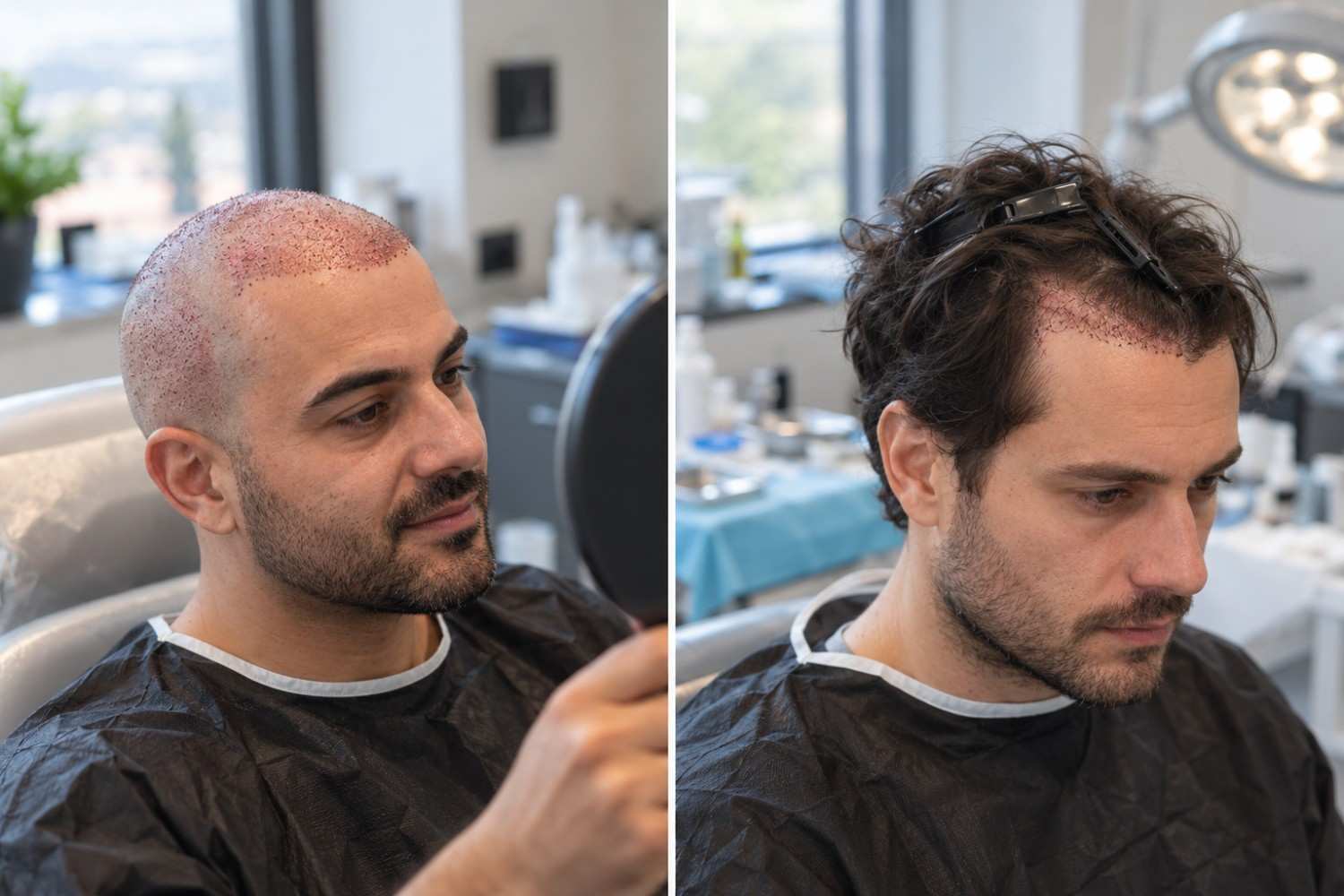
When comparing shaved vs unshaved FUE options, the choice depends on your hair loss, graft needs, budget, and privacy. Shaved FUE may suit larger sessions, while unshaved FUE may preserve your hairstyle. A personal assessment can help you weigh both approaches against your goals.
Hair Transplant Boca can assess your donor hair and discuss which FUE approach may fit your needs. Dr. Niranjan Shintre will review your goals and explain the treatment options available at the clinic.
What Is the Difference Between Shaved and Unshaved FUE?
How FUE Works
FUE moves small groups of hair from a donor area to a place where hair has thinned. The donor area is often at the back or sides of the head. We plan each FUE hair transplant in Boca Raton FL around the person’s hair and goals.
Full Shave
With a full shave, the care team cuts the hair short across a large part of the head. This gives the doctor a clear view of the donor area and the area that needs new hair. When you compare shaved vs unshaved FUE options, think about how much hair you need to move and how you want your hair to look after treatment.
Partial Shave
A partial shave leaves most hair long. The care team trims a smaller patch in the donor area, often beneath longer hair that can cover it. The area that needs new hair may also need some trimming. Your hair length and treatment plan affect how well the longer hair can hide the trimmed patch.
Unshaved FUE
Unshaved FUE aims to keep most of your hair at its usual length. The doctor may still trim individual hairs or small spots to remove and place grafts. The work can take more time because longer hair may get in the way. When choosing shaved or unshaved FUE, ask exactly which areas would need trimming.
When Is Shaved FUE a Good Choice?
Treating a Larger Area
Shaved FUE may suit people who need hair across a larger part of the scalp. Short hair lets the doctor see where each graft goes. Among shaved vs unshaved FUE options, this approach can give the doctor more room to work.
Reaching Donor Hair
The doctor takes grafts from the donor area, often at the back or sides of the head. Shaving this area makes the hairs easier to see and reach. This can help the doctor spread the work across the area without taking too much hair from one spot.
Planning the Grafts
Each graft holds a small group of hairs. When choosing shaved or unshaved FUE, the number of grafts matters. We must check your donor hair, the size of the thin area, and your goals before we can plan the right number.
Preparing for a Shorter Hairstyle
Shaved FUE will change how your hair looks at first. You may have short hair across your head or in the areas the doctor needs to treat. Ask which parts we would shave so you can plan for that change.
When Is Unshaved FUE a Good Choice?
Keeping Your Hair Long
Unshaved FUE may suit someone who wants to keep most of their hair at its usual length. Among shaved vs unshaved FUE options, it may cause less change to your hairstyle. A doctor may still need to trim a few hairs or small areas.
Keeping the Treatment More Private
Longer hair may help cover parts of the scalp after treatment. This can matter if you want fewer people to notice a change in your hair. It will not hide every sign of treatment, so ask what your scalp may look like afterward.
Treating a Smaller Area
Unshaved FUE may be easier to plan when only a small area needs new hair. The doctor has to work around the hair you keep, which may take more time. When choosing shaved or unshaved FUE, ask how the size of the area affects your plan.
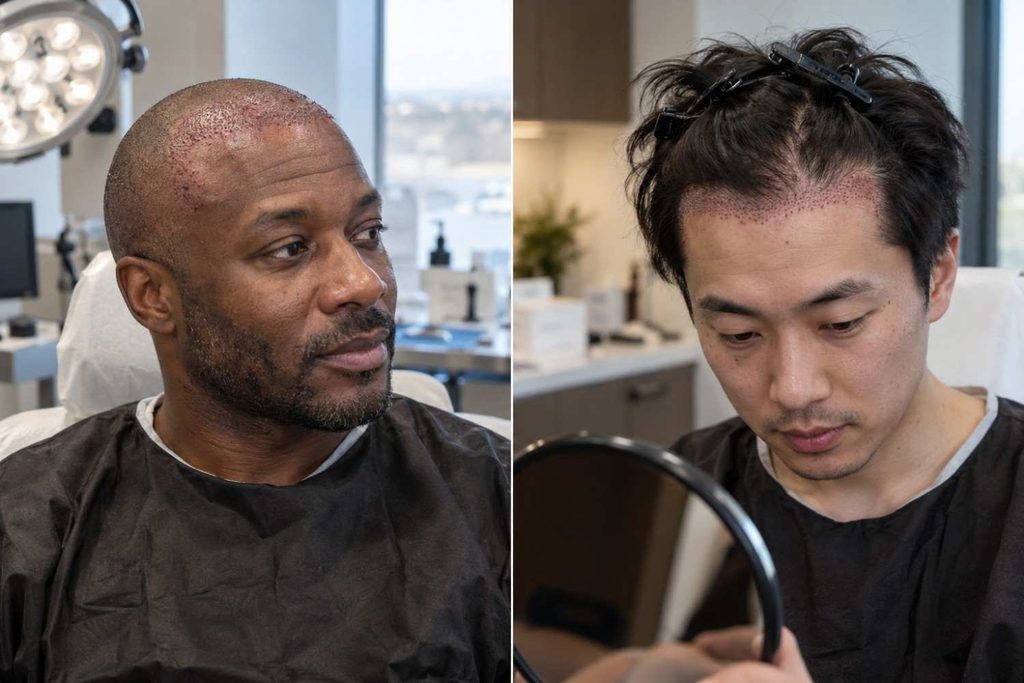
Shaved vs. Unshaved FUE: How Do They Compare?
What Changes With Each Approach?
The shaved vs unshaved FUE options differ in how much hair the doctor trims and how easy it is to reach each graft.
| What to Compare | Shaved FUE | Unshaved FUE |
| Shaving | The doctor trims a larger area. | The doctor may trim single hairs or small spots. |
| Treatment area | May suit a larger area. | May suit a smaller area. |
| Graft needs | May make it easier to plan more grafts in one session. | Working around long hair may limit the plan. |
| Procedure time | It may take less time. | It may take more time. |
| Visible signs | Short hair makes treated areas easier to see. | Long hair may help cover some signs of treatment. |
| Cost | Depends on your plan. | May cost more if the work takes longer. |
How Do We Plan for You?
Your donor hair, treatment area, and goals shape the plan. We check these details before we suggest a graft count. Your hair restoration cost also depends on the care you need.
Can a Partial Shave Offer Another Option?
How Does a Partial Shave Work?
A doctor can trim a small section at the back or side of the head. This spot holds the donor hair used for FUE. Longer hair above the spot may fall over it and help hide the cut area. A partial shave can offer a middle path between shaved vs unshaved FUE options. It keeps most of your hair long, but the doctor can still see the trimmed spot. The area where the doctor places new hair may also need some trimming.
Who Might Benefit From It?
Hair length plays a key role. If your hair is too short, it may not cover the trimmed spot. The number of grafts matters as well. A larger plan may need more donor hair than a small shaved section can provide. When choosing shaved or unshaved FUE, ask whether a partial shave could fit your hair and graft needs.
What Factors Help Decide Which FUE Approach Fits You?
Size of the Treatment Area
The size of the thin area helps shape your plan. A large area may need more grafts, so the doctor may need more room to work. The shaved vs unshaved FUE options can suit different treatment sizes.
Donor Hair Quality
The doctor checks the hair at the back and sides of your head. Its thickness and amount can affect how many grafts we can take. We also look at your pattern of hair loss. Learning about hair loss causes can help you understand why your hair has changed.
Number of Grafts Needed
A graft holds a small group of hairs. We check your donor hair and the area you want to fill before we plan a graft count. A larger graft plan may call for more shaving, but an exam helps us decide what fits.
Hairstyle and Privacy
Long hair may cover a small shaved spot. Short hair may leave that spot in view. When choosing shaved or unshaved FUE, tell the doctor how much you want to keep your current hairstyle and who might see the change.
Budget and Treatment Time
Working around long hair may take more time. The total cost also depends on your graft plan and the work involved. Ask which areas need trimming and what your quote includes before you make a choice.
Why Does a Personal Assessment Matter?
Check Your Donor Hair
We look at the hair on the back and sides of your head. We check how much hair you have and where we can take grafts. The shaved vs unshaved FUE options depend in part on what we find. A closer look also helps us avoid taking too many grafts from one spot.
Review Your Hair Loss and Goals
Hair loss can affect a small spot or a large part of your scalp. We check the pattern and ask what you hope to change. When choosing shaved or unshaved FUE, these details help us plan which areas may need trimming.
- Hair loss pattern: We note where your hair is thin.
- Graft needs: We plan how much hair the area may need.
- Your goals: We ask how you want your hair to look.
Talk With Your Physician
Dr. Niranjan Shintre, M.D., FACS has experience with FUE. He can review your hair, explain the approaches available at our clinic, and help you weigh each choice. No method can promise better growth for every person.
Ready to Talk About Your FUE Options?
Your hair, goals, and comfort all matter when you compare shaved vs unshaved FUE options. Hair Transplant Boca can review your donor hair and the areas you want to treat. We can explain which FUE approaches are available and what each one may mean for your hairstyle.
Tell us what you hope to change and ask any questions you have. To take the next step, call us at (561) 956-2005 for a personal assessment. We can help you understand your choices and plan care that fits your needs.
FAQs
Do I have to shave my whole head for FUE?
No. A doctor may shave the whole head, trim part of it, or trim small spots. The plan depends on your hair, the area you want to treat, and the number of grafts you may need.
Can I keep my hair long during FUE?
You may be able to keep most of your hair long. A partial shave can leave longer hair over a trimmed spot. Some approaches also trim only small areas. Ask which parts of your hair would need trimming before you choose a plan.
Is shaved FUE better for a large treatment area?
Shaved FUE may make it easier for the doctor to reach and see more donor hair. That can help when a larger area needs treatment. Still, the best approach depends on your donor hair and the grafts you need.
Does unshaved FUE take more time?
It may. The doctor has to work around longer hair when removing and placing grafts. The time needed depends on your treatment plan and graft count. An assessment can give you a clearer idea of what to expect.
How do I know which FUE option fits me?
A physician can check your donor hair, hair loss pattern, and goals. Share how much you want to keep your current hairstyle. Then ask which areas need trimming and which approaches are available for your plan.